Why Nutrition Matters for Eye Health
When patients think about protecting their vision, they often focus on glasses or surgery. However, one of the most important — and often overlooked — factors is nutrition.
The retina is one of the most metabolically active tissues in the body. It is constantly exposed to light and oxygen, making it particularly vulnerable to oxidative stress. Over time, this contributes to ageing changes and conditions such as macular degeneration.
Key Nutrients for Healthy Eyes
Research has consistently identified several nutrients that play a critical role in maintaining retinal health:
- Lutein and zeaxanthin – help filter harmful blue light
- Vitamin C and Vitamin E – protect against oxidative damage
- Zinc – supports vitamin A transport to the retina
- Omega-3 fatty acids – support retinal structure and function
These nutrients form the basis of evidence-based formulations used in clinical studies.
 You can read more about supplements in our guide to “Supplements for Eye Health: Do You Really Need Them?”
Can Diet Alone Protect Your Vision?
While a balanced diet is essential, many people do not consistently consume enough of these nutrients.
This is why clinical studies have explored targeted supplementation for patients at risk of retinal disease.
For a deeper look at this, see: “Can Diet Really Slow Macular Degeneration?”
Practical Tips for Improving Eye Health Through Diet
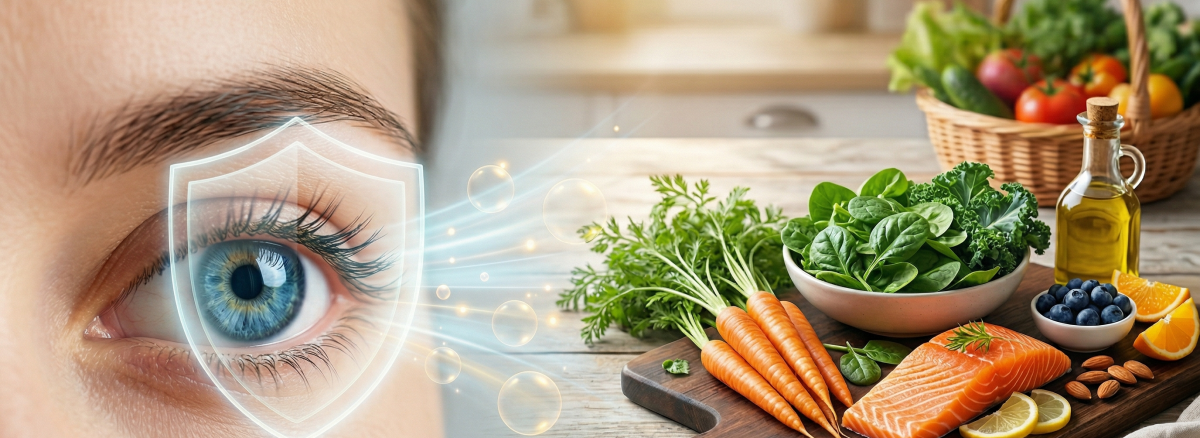
- Eat leafy greens daily
- Include oily fish twice weekly
- Reduce processed foods and sugar
- Stay consistent rather than aiming for perfection
Final Thoughts
Nutrition is not a replacement for professional eye care — but it is a powerful tool for long-term protection.